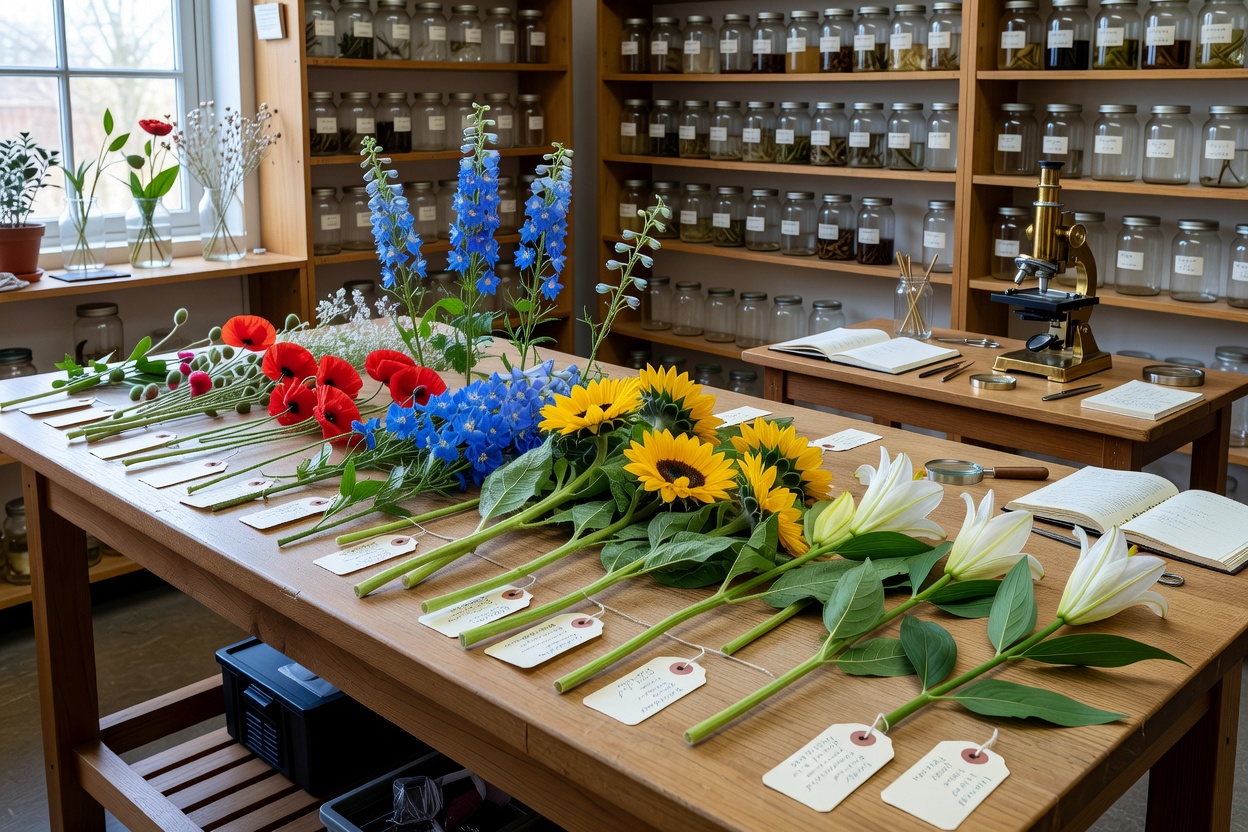
1. The Four Biological Harvest Phases
Commercial cut stems cycle through four distinct production methods throughout the European agricultural year:
- Phase 1: Spring Geophytes (February – May): Characterized by bulb-derived monocots: Tulipa, Narcissus, Hyacinthus, Muscari, and Ranunculus. Early crops originate in Dutch hydro-forcing halls; late-spring crops come from open field cuts in the UK, Netherlands, and Brittany.
- Phase 2: High Summer Perennials & Field Annuals (June – August): Maximum botanical diversity. Characterized by Paeonia (peonies), Delphinium, Lavandula, field roses, and Gladiolus. High stem counts suppress unit prices across open municipal markets.
- Phase 3: Late-Season Composites & Foliage (September – November): Characterized by short-day flowering varieties including Dahlia, Chrysanthemum, ornamental cabbages (Brassica), Hydrangea, and fruiting branches (rosehips, Hypericum, Symphoricarpos).
- Phase 4: Winter Dormancy & Hothouse Forcing (December – January): Minimal domestic field production. Markets trade evergreen foliage (Eucalyptus, Pinus, Ilex berries), forced Hippeastrum (amaryllis), Helleborus, and Mediterranean mimosa (Acacia dealbata).
2. Production Channels: Field, Glasshouse, and Air Import
Stem quality and price correlate with the production channel:
Field-Grown (Outdoor): Lower carbon footprint, thicker stems, but higher vulnerability to insect damage, mud splattering, and botrytis blight. Field stems possess shorter vase lifespans if exposed to rain prior to harvesting.
Commercial Glasshouse: Uniform stem length, pristine petals, pesticide-managed environments, and scheduled harvesting dates. Energy costs make winter hothouse blooms 40% to 75% more expensive at retail counters.
Intercontinental Imports: Year-round supply of standard roses, carnations, and alstroemeria arriving primarily via air cargo terminals at Amsterdam, Frankfurt, and London Heathrow. Stems are chemically treated for transit longevity but lack scent.
3. Varietal Availability Matrix
| Botanical Genus | Peak Supply Window | Dominant Production Method | Average Vase Life | Cold Sensitivity |
|---|---|---|---|---|
| Tulipa (Tulip) | February – April | Hydro-Glasshouse & Field | 5–8 days | High frost resistance |
| Paeonia (Peony) | May – June | Open Field | 4–7 days | Moderate resistance |
| Rosa (Cut Rose) | Year-round | Commercial Glasshouse & Import | 7–12 days | Sensitive below 2°C |
| Dahlia | August – October | Open Field | 4–6 days | Killed by first frost |
| Ranunculus | January – April | Unheated Tunnels (Italy/France) | 8–12 days | High cold tolerance |
| Eucalyptus | September – March | Open Field / Mediterranean | 14–21 days | High resilience |
4. Evaluating Cut Stem Freshness
To assess physiological stem condition before purchase:
- Calyx Assessment: For roses and ranunculus, inspect the green sepals beneath the petals. Reflexed downwards or dry brown edges indicate aged stock stored in cold warehouses for extended durations.
- Vascular Xylem Check: Examine the bottom 1 cm of the stem. A clear, crisp cut without dark discoloration indicates intact vascular tissue capable of taking up water.
- Ethylene Damage: Inspect for bud dropping or translucent petal edges in sweet peas, delphiniums, and carnations. Storing cut flowers next to fruit crates in general markets accelerates ethylene senescence.
Good for
- Understanding what botanical varieties are legitimately in season during travel months.
- Distinguishing between field-harvested local stems and chemically treated long-haul imports.
- Calculating post-purchase vase viability for residential or hotel staging.
What to know
- Peonies have a very narrow European open-field window (approximately six to eight weeks across May and June).
- Scented historical varieties are almost exclusively field-grown and will rarely survive air cargo distribution.
- Never submerge hollow-stem flowers (e.g. Amaryllis, Delphinium) in deep ice water without pin-pricking air escape holes beneath the flower head.