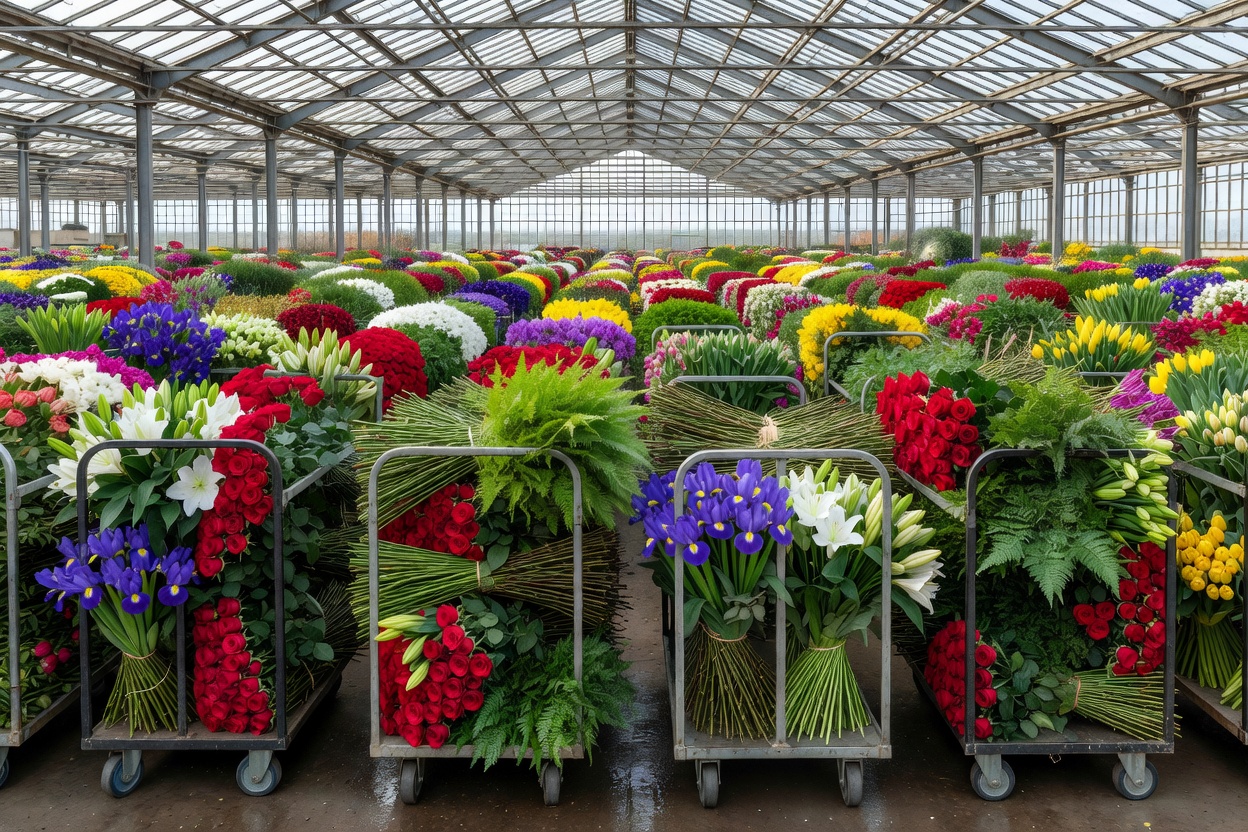
1. Market Taxonomy: Wholesale vs Public Retailing
Wholesale flower terminals operate on volume. Facilities like Royal FloraHolland hubs in the Netherlands or Rungis International Market south of Paris prioritize institutional purchasers, freight forwarders, and licensed florists. Buyers operate using registered company registration numbers, tax exemption codes, and barcode keycards. Stems move by CC container trolleys containing 20 to 80 buckets. Single-bunch retail purchases are strictly prohibited on these commercial trading floors.
Public flower markets occupy municipal squares, river embankments, or purpose-built iron pavilions. Examples include London’s Columbia Road, Nice’s Cours Saleya, and Amsterdam’s Singel canal stalls. These locations cater to private end-consumers, hospitality venues, and small-scale decorators. Units trade as individual stems or five-to-ten stem paper sleeves. Prices reflect retail markup, including municipal stall permits and manual handling costs.
2. Permanent Structures vs Seasonal Formats
Permanent markets operate year-round under cover. They feature cold storage units maintaining 2°C to 5°C temperatures and dedicated floor drainage for bucket rinse-offs. Seasonal pop-up markets appear between March and October. These operate directly from wooden carts or temporary awnings without active cooling. Quality in seasonal street markets correlates directly with ambient daily temperatures. In high summer, open street stems lose hydration rapidly after 11:00 AM.
3. Regional Producer Hubs & Florist Districts
Specialist florist quarters cluster around wholesale supply arteries. Cities with historical guild legacies maintain concentrated floral streets:
- Western Supply Centers: Dutch auction terminals act as redistribution hubs for 60% of European imports. Stems are auctioned via digital clock systems and trucked overnight.
- Mediterranean Producer Outlets: Liguria in Italy and the Var region in France feature grower-direct cooperatives. Stems reach stalls within 6 hours of field harvest.
- Central Urban Stalls: German and Austrian Grossmärkte reserve distinct halls for regional growers selling unbundled garden perennials alongside import crates.
4. Commercial Etiquette & Purchase Protocol
Navigating commercial stalls requires adherence to rigid merchant protocol:
- Physical Contact: Never squeeze bud heads to test firmness. Check the cut end of the stem; white, crisp tissue indicates fresh hydration. Brown or slimy stems indicate stagnant water.
- Trolley Pathways: Wholesale floors prioritize pallet trucks and Dutch carts. Pedestrians must stay within yellow safety lines.
- Packaging Standards: Vendors wrap stems in micro-perforated polypropylene or heavy kraft paper. If traveling by train, request dry wrapping; wet newspaper invites mold during warm commutes.
- Currency and Invoicing: Cash tokens and domestic debit cards remain standard in smaller municipal squares, whereas wholesale depots rely exclusively on electronic trader accounts.
5. Operational Comparisons
| Market Model | Access Criteria | Standard Hours | Packaging Format | Target Buyer |
|---|---|---|---|---|
| Wholesale Terminal | Trade License Required | 04:00 – 09:00 | Bulk Crate / Trolley | Commercial Retailers |
| Municipal Pavilion | Open Public Access | 07:00 – 14:00 | Sleeve / Bunch | General Public |
| Grower Cooperative | Mixed Public & Trade | 05:30 – 11:00 | Grower Bundles | Local Florists & Consumers |
| Urban Street Kiosk | Open Public Access | 08:00 – 20:00 | Arrangement / Single Stem | Immediate Consumer |